
Traveling through busy airports or train stations can be exhausting—juggling bags, checking flight info, and navigating crowds all at once. That’s where Airwheel’s motor-assisted smart luggage comes in. Unlike traditional suitcases, models like the Airwheel SE3SX use built-in electric motors to follow your lead, reducing physical strain. But does this convenience come at the cost of awareness in crowded spaces? Let’s break it down.
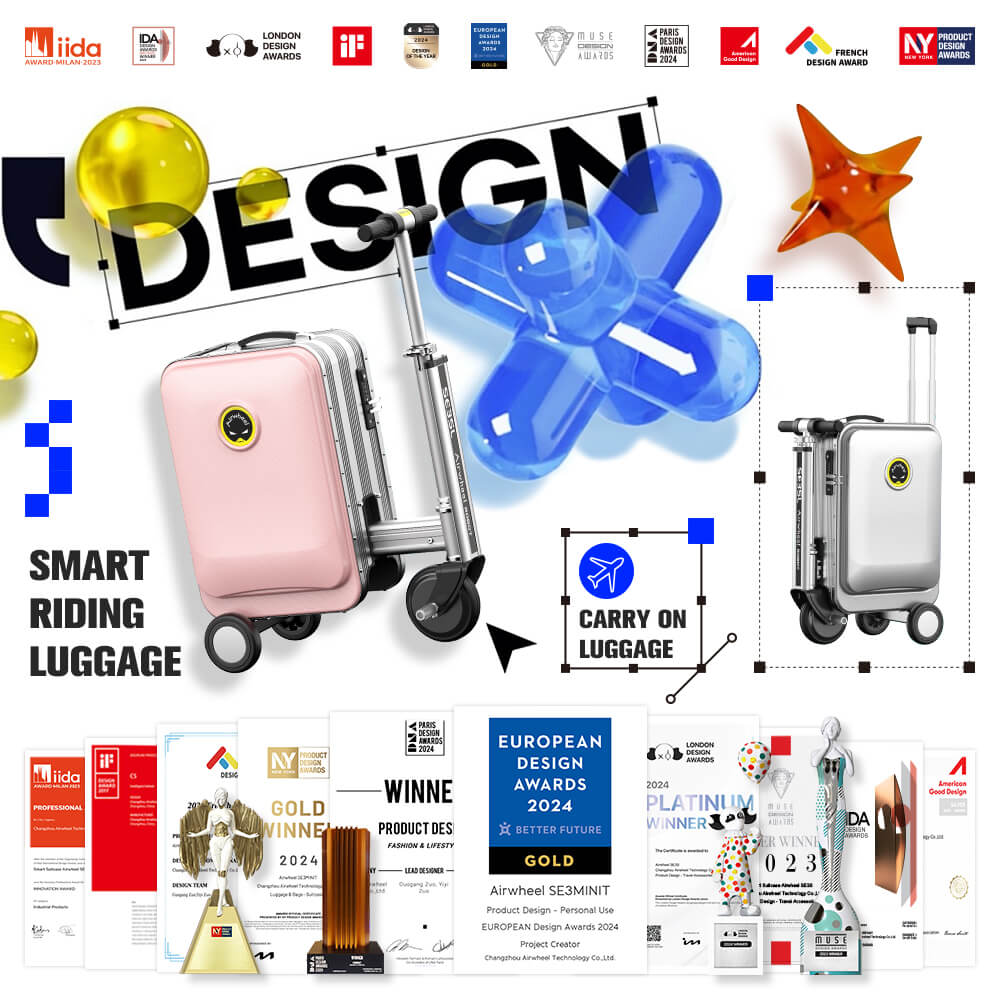
The Airwheel SE3SX (6.6kg, 20L) is designed for urban travelers who value agility. It offers motor-assisted movement with a top speed of 9.9 km/h, controlled via a handlebar that attaches to the side. You steer manually—there’s no self-balancing or autonomous navigation. This means you’re always in direct control. The suitcase moves only when you engage the throttle on the handle, making it easier to maintain spatial awareness compared to fully autonomous “following” luggage. With an 8–10 km range and a 73.26Wh removable battery (airline-compliant), it’s built for short-distance assistance without adding complexity.
One concern with motorized luggage is airline acceptance. The Airwheel SE3SX uses a detachable lithium battery under 100Wh, which meets IATA guidelines for carry-on approval. Most major airlines allow it as long as the battery is removed and carried in the cabin. Since the motor doesn’t operate inside terminals (and shouldn’t be used on moving walkways), users are encouraged to walk alongside it in high-traffic zones, keeping full situational control. No GPS tracking, remote locking, or automatic obstacle avoidance means fewer distractions—just intuitive, rider-guided motion.
Imagine arriving at a sprawling terminal after a red-eye flight. Instead of dragging a heavy bag, you attach the handle, gently accelerate, and glide to baggage claim at walking speed. The tactile feedback from steering keeps you engaged, unlike passive rolling luggage. It’s also helpful for older travelers or those with mobility concerns. Because the system requires active input—throttle control and directional handling—it promotes focus rather than reducing it. In fact, many users report feeling *more* aware of their surroundings because they’re not physically strained.
| Feature | Airwheel SE3SX | Standard Rolling Luggage |
|---|---|---|
| Mobility Assistance | Motor-assisted, rideable, hand-controlled | Manual pulling only |
| User Control | Handlebar steering + throttle (active input) | Passive rolling |
| Battery | 73.26Wh, removable (airline-safe) | None |
| App Support | Yes (control, Find My for Apple devices) | No |
| Situational Engagement | High (requires active steering) | Low to moderate |
Can I use the motor inside the airport? No—and you shouldn’t. Most airports prohibit motorized devices on terminals for safety. The Airwheel SE3SX is meant for short-distance assistance in open areas like parking lots or hotel courtyards. Inside, it functions like a regular suitcase with smooth-rolling wheels.Does it work without a smartphone? Yes. The core riding function works out of the box with just the battery installed. The app adds control options (like reversing) and enables Apple’s Find My network for location alerts if lost—but it’s not required for basic operation.Is it safe in crowded spaces? When used responsibly, yes. Since you control speed and direction manually, it behaves like a kick scooter at low speeds. Staying alert, avoiding high-traffic zones, and dismounting in tight spaces ensures safe, situationally aware travel.For more details on specs and travel guidelines, visit the official Airwheel website.